Exiting replaceorappendinstalldate coid downloadmanagernow 76dcec3103db4946bb9ca0c5cc0b761e exe
However, a replaced starting page is far not the worst issue that one might have when encountered with the invasive program. Another thing that the program is known to be capable of is tracking the user’s online activity. If you have the PUP on your PC, then what you do online is more than likely being monitored by the unwanted software and the acquired data is being kept for future use. There are a lot of programs known to do for marketing purposes. They gather user data from the browser and later implement the gained info within adverts generated by them so that the ads seem more likable and attractive. However, once the information is extracted from the browser, the user has no control whatsoever regarding what happens with it. For what you know, your personal data might get sold to third parties over and over again and you would not be able to do anything about it. Programs known to do that are usually referred to as Browser Hijackers and since EasyPDFCombine, too, seems to possess similar traits, one might as well categorize it as a Hijacker.
How threatening is it?
Obviously, EasyPDFCombine is not as perfect as it might seem at first sight. However, it is still a legit piece of software and to users that don’t mind having their privacy invaded and their browser settings modified, it might even turn out to be quite useful. Despite the fact that it might a potentially unwanted software, the program we are talking about is not inherently harmful and, on its own, it should not pose any threat to your machine. In the end, it is up to the individual user to decide whether or not it is acceptable to have their virtual personal space invaded in exchange for a couple of useful features that the software in question is said to provide. In case you already had the PUP installed onto your computer and are currently trying to uninstall it, be sure to check our removal guide beneath this article which will help you to get rid of the program quickly and effectively.
How does it get installed?
Something that we haven’t mentioned yet is that a lot of people have been complaining that the PUP has gotten onto their computers without them actually wanting to install it. This is because one of the most common ways of distributing EasyPDFCombine is via the so-called file bundling. When a piece of software is bundled with another program, once the other program gets installed, the said bundled software gets installed along. Usually, there is an option that allows the user to uncheck the bundled application so as to install only the main program. However, a lot of users tend to neglect that and pay little to no attention regarding what added applications there might be within the setup wizard. Additionally, the developers themselves might sometimes try to make it more difficult to notice when there have been applications bundled within the main install. For example, a lot of times one must opt for the Custom installation settings so as to see what has been bundled as additional installs. This is precisely what our advice for you is. From now on, every time you are about to install a new program, make sure that you check every single option within the setup wizard and if you find out that there are in fact applications that have been bundled with the main program, look them up to see if they are potentially unwanted. In case anything added appears to be shady and seems likely to be unwanted, uncheck it, just to be sure.
SUMMARY:
| Name | EasyPDFCombine |
| Type | PUP |
| Danger Level | Low |
| Symptoms | Usually, the PUP’s presence can be noticed when you enter your browser and see that it’s homepage has been changed without your permission. |
| Distribution Method | In the majority of instances, this PUP is distributed via the file-bundling method. |
| Detection Tool |
More information on SpyHunter, steps to uninstall, EULA, Threat Assessment Criteria, and Privacy Policy. If SpyHunter detects a malware, you will have to purchase a license to remove it.
Keep in mind, SpyHunter’s malware detection tool is free. To remove the infection, you’ll need to purchase the full version.
More information about SpyHunter and steps to uninstall.
Содержание
EasyPDFCombine Uninstall
If you are a Windows user, continue with the guide below.
If you are a Mac user, please use our How to remove Ads on Mac guide.
If you are an Android user, please use our Android Malware Removal guide.

Some of the steps will likely require you to exit the page. Bookmark it for later reference.

This is the most important step. Do not skip it if you want to remove EasyPDFCombine successfully !
Press CTRL + SHIFT + ESC at the same time and g o to the Processes Tab ( t he “Details” Tab on Win 8 and 10 ) . Try to determine which processes are dangerous.
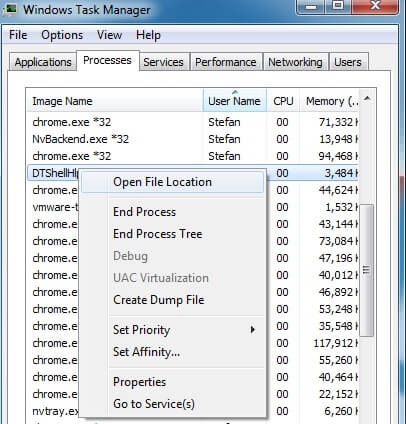
Right click on each of them and select Open File Location . Then scan the files with our free online virus scanner:
File Name:
—>
This scanner is free and will always remain free for our website’s users. You can find its full-page version at: https://howtoremove.guide/online-virus-scanner/
Scan Results
| Virus Scanner | Result |
|---|---|
| ClamAV | |
| AVG AV | |
| Maldet |
File Name:  |
| File Size: |
| File Type: |
| Detection ratio: |
Scan Results
| Virus Scanner | Result |
|---|---|
| ClamAV | |
| AVG AV | |
| Maldet | |
A fter you open their folder, end the processes that are infected, then delete their folders.
Note: If you are sure something is part of the infection – delete it, even if the scanner doesn’t flag it. No anti-virus program can detect all infections.

Hold together the Start Key and R . Type appwiz.cpl –> OK.
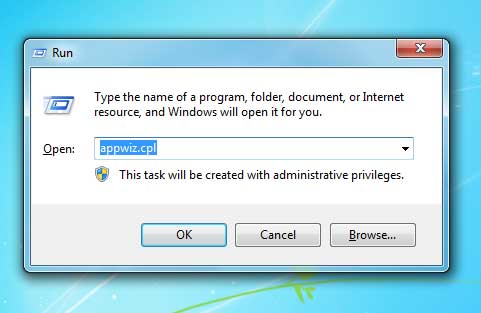
You are now in the Control Panel . Look for suspicious entries. Uninstall it/them .
Type msconfig in the search field and hit enter. A window will pop-up:
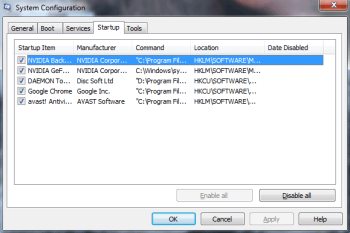
Startup —> Uncheck entries that have “Unknown” as Manufacturer or otherwise look suspicious.

Hold the Start Key and R – copy + paste the following and click OK:
notepad %windir%/system32/Drivers/etc/hosts
A new file will open. If you are hacked, there will be a bunch of other IPs connected to you at the bottom. Look at the image below:
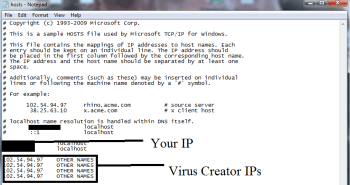
If there are suspicious IPs below “Localhost” – write to us in the comments.
Open the start menu and search for Network Connections (On Windows 10 you just write it after clicking the Windows button), press enter.
- Right-click on the Network Adapter you are using —>Properties —>Internet Protocol Version 4 (ICP/IP), click Properties.
- The DNS line should be set to Obtain DNS server automatically. If it is not, set it yourself.
- Click on Advanced —> the DNS tab. Remove everything here (if there is something) —>OK.
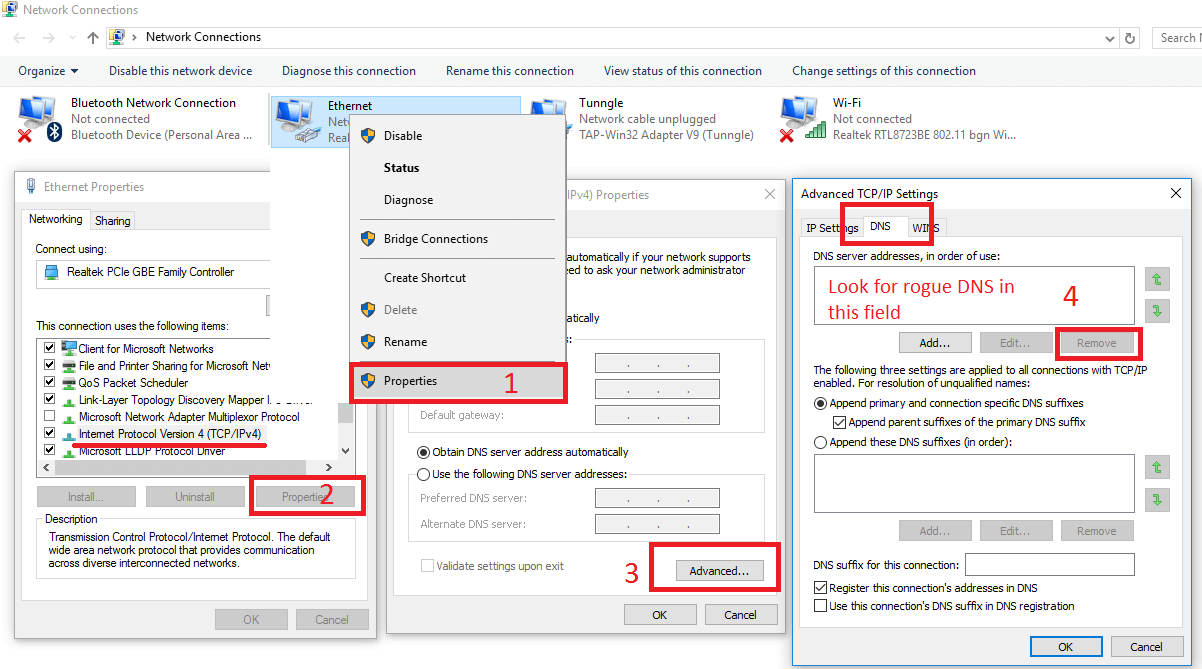

- After you complete this step, the threat will be gone from your browsers. Finish the next step as well or it may reappear on a system reboot.
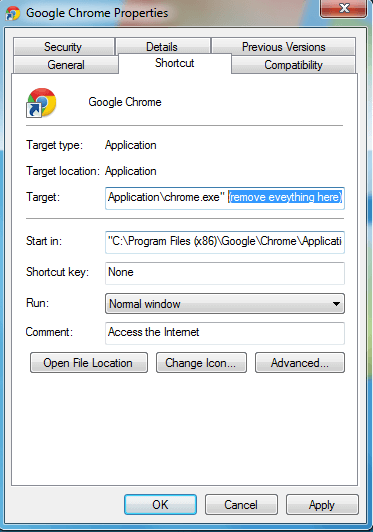
Right click on the browser’s shortcut —> Properties.
NOTE: We are showing Google Chrome, but you can do this for Firefox and IE (or Edge).
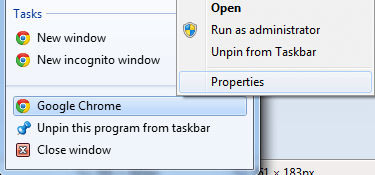
Properties —–> Shortcut. In Target, remove everything after .exe.
 Open IE , click
  —–> Manage Add-ons .
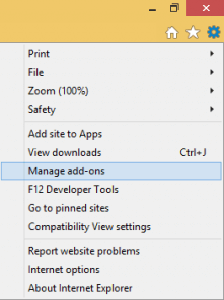
Find the threat —> Disable . G o to —–> Internet Options —> change the URL to whatever you use (if hijacked) —> Apply.
Remove EasyPDFCombine from Firefox :
 Remove EasyPDFCombine from Firefox :
 Open Firefox , click  ——-> Add-ons —-> Extensions .
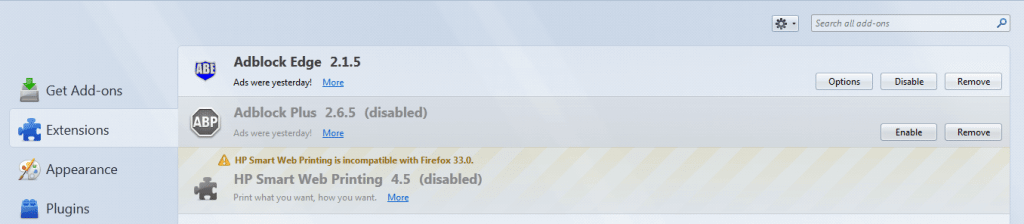
Find the adware/malware —> Remove .
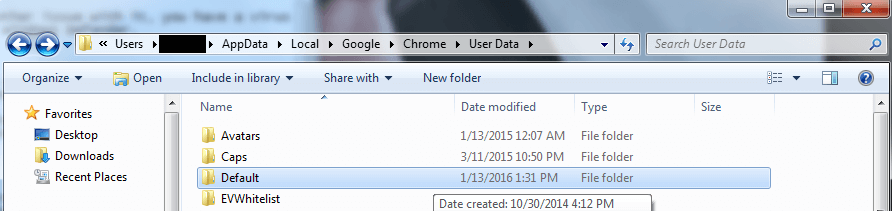
Rename it to Backup Default. Restart Chrome.
Type Regedit in the windows search field and press Enter.
Inside, press CTRL and F together and type the threat’s Name. Right click and delete any entries you find with a similar name. If they don’t show up this way, go manually to these directories and delete/uninstall them:
- HKEY_CURRENT_USER—-Software—–Random Directory. It could be any one of them – ask us if you can’t discern which ones are malicious.
HKEY_CURRENT_USER—-Software—Microsoft—-Windows—CurrentVersion—Run– Random
HKEY_CURRENT_USER—-Software—Microsoft—Internet Explorer—-Main—- Random
If the guide doesn’t help, download the anti-virus program we recommended or try our free online virus scanner. Also, you can always ask us in the comments for help!
Internet Download Manager — одна из самых известных программ, которая позволяет загружать файлы из Интернета, проще говоря, перед вами менеджер загрузок. Итак, почти каждый из нас сталкивался с необходимостью скачать какой-то файл, ведь многие из нас интересуются программами, музыкой, видео, кто-то ищет документы, разницы нет, нас всех объединяет одно, нам надо качать информацию. Некоторые это делают доверяя своему браузеру, ведь не секрет, что скачивать файлы можно используя его, а некоторые используют для этого менеджеры загрузок, вот Internet Download Manager один из таких, сам пользуюсь этой программой и вам советую, устраивает вполне, скачать бесплатно можете немного ниже.
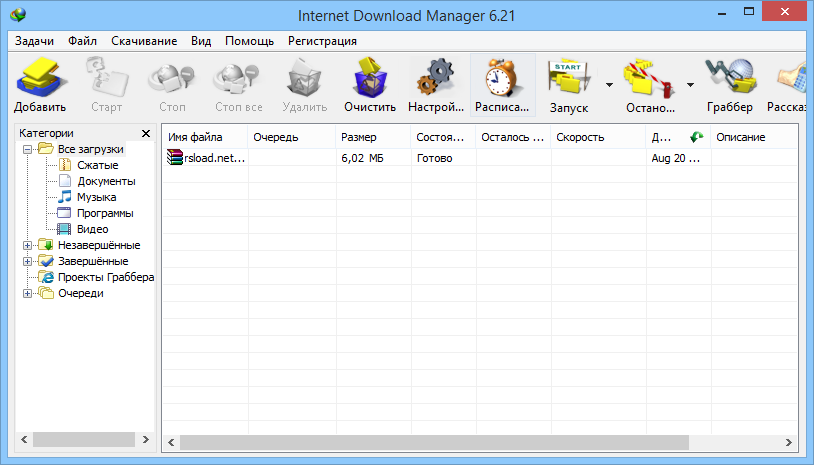
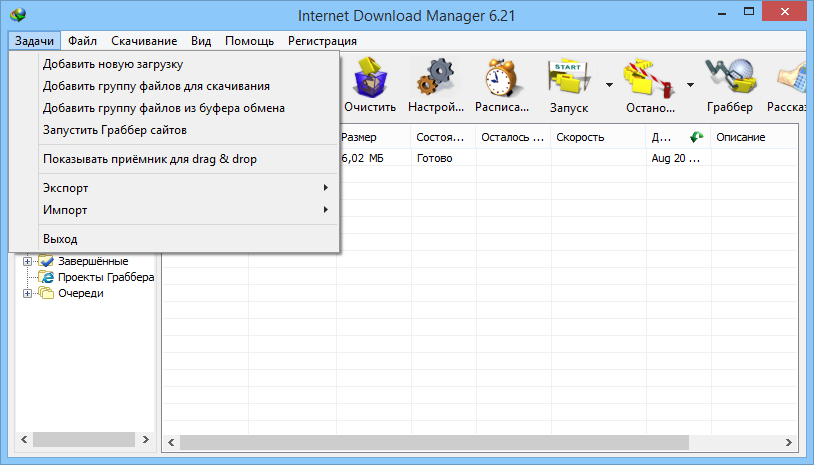
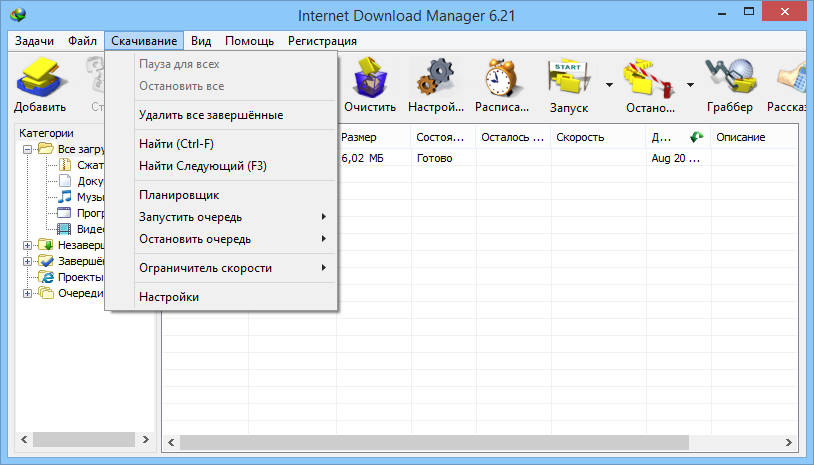
После установки и запуска приложения, перед вами будет вполне понятное окно с приятным пользовательским интерфейсом. В нем вы сможете наблюдать список всех загруженных файлов или файлов которые еще грузятся. Верхняя панель дает нам доступ к наиболее важным функциям менеджера в виде иконок. Вы сможете добавить новую загрузку, стартовать загрузку на паузе, очистить список, перейти к настройкам, настроить работу по расписанию, запустить граббер сайтов и так далее.
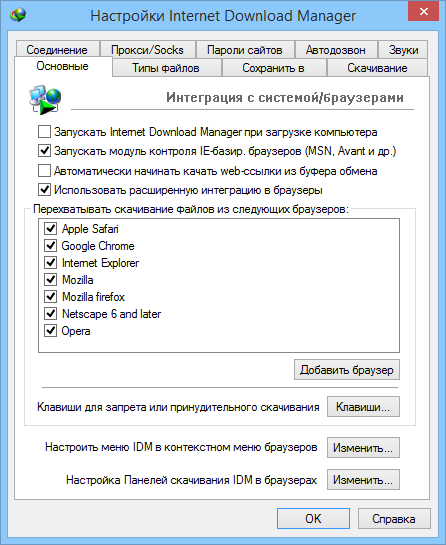
Обратите внимание, что Internet Download Manager интегрируется во все популярные веб-браузеры, например: Google Chrome, Internet Explorer, Mozilla Firefox, Opera, Safari. Программа автоматически будет интегрирована, тем самым облегчая доступ к загрузке каждый раз, когда это возможно сделать. Если вы просматриваете видео, то рядом с плеером будет маленькая панелька, нажимая на которую можно выбрать качество видео и приступить к его скачиванию, а можно отложить загрузку и возобновить ее потом по необходимости. Если у вас браузер с которым программа не работает, то вы сможете самостоятельно добавить его в настройках.
Internet Download Manager предлагает для каждого формата файлов установить категорию куда он будет сохранен, например все программы можно автоматически качать в одну папку, все видео файлы в другую и так далее, лично у меня установлен один каталог, а дальше я уже сам сортирую, не всегда может удобно, но я уже привык. Данный менеджер удобен тем, что он может перехватывать видео и аудио файлы почти из любых источников, я редко встречаю сайты, которые не дают загрузить потоковые данные.
Если говорить про скорость загрузки, то конечно с браузерами сравнивать даже не стоит, а вот с другими качалками, даже не знаю, меня все устраивает, свой канал я нагружаю максимум, поэтому не жалуюсь. Если вы качаете с ФО сетей, то можете заполнить данные, логин и пароль, после программа будет автоматически подхватывать ссылки и качать без проблем. В целом написать больше нечего, советую всем скачать Internet Download Manager с нашего сайта, сделать это можно бесплатно и даже не проходя регистрацию, почитайте отзывы в комментариях, если есть вопросы, пишите не стесняйтесь, вам помогут всегда, всем удачи!
There are nightly binary builds available. Those builds are not always as stable as the release, but they contain numerous bugfixes and performance improvements.
We provide binaries for x86, ARM, PPC and s390x running on different operating systems such as Linux, Mac OS X and Windows (what’s new in PyPy 7.2.0?):
- the Python2.7 compatible release — PyPy2.7 v7.2.0
- the Python3.6 compatible release — PyPy3.6 v7.2.0
- the Python2.7 Software Transactional Memory special release — PyPy-STM 2.5.1 (Linux x86-64 only)
- Download
- Default (with a JIT Compiler)
- Other versions
Installing (optional) Installing more modules Building from source Packaging Checksums These binaries include a Just-in-Time compiler. They only work on x86 CPUs that have the SSE2 instruction set (most of them do, nowadays), or on x86-64 CPUs. They also contain stackless extensions, like greenlets.
Linux binaries are dynamically linked, as is usual, and thus might not be usable due to the sad story of linux binary compatibility. This means that Linux binaries are only usable on the distributions written next to them unless you’re ready to hack your system by adding symlinks to the libraries it tries to open. There are better solutions:
- use Squeaky’s portable Linux binaries.
- or download PyPy from your release vendor (usually an outdated version): Ubuntu (PPA), Debian, Homebrew, MacPorts, Fedora, Gentoo and Arch are known to package PyPy, with various degrees of being up-to-date.
- or translate your own PyPy.
- Linux x86 binary (32bit, built on Ubuntu 16.04) (see [1] below)
- Linux x86-64 binary (64bit, built on Ubuntu 14.04) (see [1] below)
- Mac OS X binary (64bit)
- FreeBSD x86 and x86_64: see FreshPorts
- Windows binary (32bit) (you might need the VC runtime library installer vcredist.x86.exe.)
- Linux aarch64 binary (64bit, built on Ubuntu 18.04) (see [1] below)
- PowerPC PPC64 Linux binary (64bit big-endian, Fedora 20) (see [1] below)
- PowerPC PPC64le Linux binary (64bit little-endian, Fedora 21) (see [1] below)
- s390x Linux binary (built on Redhat Linux 7.2) (see [1] below)
- Source (tar.bz2); Source (zip). See below for more about the sources.
- All our downloads, including previous versions. We also have a mirror, but please use only if you have troubles accessing the links above
- Linux x86-64 binary (64bit, built on Ubuntu 16.04) (see [1] below)
- Linux x86 binary (32bit, built on Ubuntu 14.04) (see [1] below)
- Mac OS X binary (64bit) (High Sierra >= 10.13, not for Sierra and below)
- Windows binary (32bit) (you might need the VC runtime library installer vcredist.x86.exe.)
- Linux aarch64 binary (64bit, built on Ubuntu 18.04) (see [1] below)
- PowerPC PPC64 Linux binary (64bit big-endian, Fedora 20) (see [1] below)
- PowerPC PPC64le Linux binary (64bit little-endian, Fedora 21) (see [1] below)
- s390x Linux binary (built on Redhat Linux 7.2) (see [1] below)
- Source (tar.bz2); Source (zip). See below for more about the sources.
- All our downloads, including previous versions. We also have a mirror, but please use only if you have troubles accessing the links above
If your CPU is really, really old, it may be a x86-32 without SSE2. There is untested support for manually translating PyPy’s JIT without SSE2 ( —jit-backend=x86-without-sse2 ) but note that your machine is probably low-spec enough that running CPython on it is a better idea in the first place.
[1]: stating it again: the Linux binaries are prov >pypy: error while loading shared libraries: …. Unless you want to hack a lot, try out the portable Linux binaries.
This is a special version of PyPy! See the Software Transactional Memory (STM) documentation.
The other versions of PyPy are:
- The most up-to-date nightly binary builds with a JIT, if the official release is too old for what you want to do. There are versions for different libc on this site too.
- Reverse debugger: This version enables debugging your Python programs by going forward and backward in time. See the RevDB documentation.
- Old-style sandboxing: A special safe version. This is NOT the version announced in-development during 2019! Read the docs about sandboxing. This version is not supported and not actively maintained. You will likely have to fix some issues yourself, or checkout an old version, or otherwise play around on your own. We provide this documentation only for historical reasons. Please do not use in production. For reference, there are some very old, unmaintained binaries for Linux (32bit, 64bit).
All binary versions are packaged in a tar.bz2 or zip file. When uncompressed, they run in-place. For now you can uncompress them either somewhere in your home directory or, say, in /opt, and if you want, put a symlink from somewhere like /usr/local/bin/pypy to /path/to/pypy_expanded/bin/pypy. Do not move or copy the executable pypy outside the tree – put a symlink to it, otherwise it will not find its libraries.
There are as yet few distribution-ready packages. We recommend installing pip, which is the standard package manager of Python. It works like it does on CPython as explained in the installation documentation.
If you use your distribution’s PyPy package we recommend you install packages into a virtualenv. If you try to build a module and the build process complains about “missing Python.h”, you may need to install the pypy-dev package.
Get the source code. The preferred way is to checkout the current trunk using Mercurial. The trunk usually works and is of course more up-to-date. The following command should run in about 7 minutes nowadays if you have hg >= 3.7 (it is much slower with older versions):
The trunk contains PyPy 2. For PyPy 3, switch to the correct branch:
Alternatively, get one of the following smaller packages for the source at the same revision as the above binaries:
Make sure you installed the dependencies. See the list here.
Enter the goal directory:
Run the rpython script. Here are the common combinations of options (works also with python instead of pypy; requires CPython 2.7 or PyPy 2, even to build PyPy 3):
Enjoy Mandelbrot 🙂 It takes on the order of half an hour to finish the translation, and about 3GB of RAM on a 32-bit system and about 5GB on 64-bit systems. (Do not start a translation on a machine with insufficient RAM! It will just swap forever. See notes below in that case.)
If you want to install this PyPy as root, please read the next section, Packaging.
It is recommended to use PyPy to do translations, instead of using CPython, because it is twice as fast. You should just start by downloading an official release of PyPy (with the JIT). If you really have to use CPython then note that we are talking about CPython 2.7 here, not CPython 3.x. (Older versions like 2.6 are out.)
On some 32-bit systems, the address space limit of 2 or 3 GB of RAM can be an issue. More generally you may be just a little bit low of RAM. First note that 2 GB is really not enough nowadays; on Windows you first need to refer to the Windows build instructions. More precisely, translation on 32-bit takes at this point 2.7 GB if PyPy is used and 2.9 GB if CPython is used. There are two workarounds:
1. use PyPy, not CPython. If you don’t have any PyPy so far, not even an older version, then you need to build one first, with some parts removed. So, first translate with . rpython -Ojit targetpypystandalone —withoutmod-micronumpy —withoutmod-cpyext , then copy pypy-c and libpypy_c.so somewhere else, and finally call it with . pypy-c ../../rpython/bin/rpython -Ojit .
2. if even using PyPy instead of CPython is not enough, try to tweak some internal parameters. Example (slower but saves around 400MB):
You can run translations with —source , which only builds the C source files (and prints at the end where). Then you can cd there and execute make. This is another way to reduce memory usage. Note that afterwards, you have to run manually pypy-c . /pypy/tool/build_cffi_imports.py if you want to be able to import the cffi-based modules.
On Linux, translating with asmgcroot, is delicate. It requires using gcc with no particularly fancy options. It does not work e.g. with clang, or if you pass uncommon options with the CFLAGS environment variable. If you insist on passing these options or using clang, then you can compile PyPy with the default shadow stack option instead (for a small performance price in non-JITted code).
Like other JITs, PyPy doesn’t work out of the box on some Linux distributions that trade full POSIX compliance for extra security features. E.g. with PAX, you have to run PyPy with paxctl -cm . This also applies to translation (unless you use CPython to run the translation and you specify —source ).
Once PyPy is translated from source the binary package similar to those prov >package.py script as following:
It is recommended to use package.py because custom scripts will invariably become out-of-date. If you want to write custom scripts anyway, note an easy-to-miss point: some modules are written with CFFI, and require some compilation. If you install PyPy as root without pre-compiling them, normal users will get errors:
- PyPy 2.5.1 or earlier: normal users would see permission errors. Installers need to run pypy -c “import gdbm” and other similar commands at install time; the exact list is in package.py. Users seeing a broken installation of PyPy can fix it after-the-fact if they have sudo rights, by running once e.g. sudo pypy -c «import gdbm.
- PyPy 2.6 and later: anyone would get ImportError: no module named _gdbm_cffi. Installers need to run pypy _gdbm_build.py in the lib_pypy directory during the installation process (plus others; see the exact list in package.py). Users seeing a broken installation of PyPy can fix it after-the-fact, by running pypy /path/to/lib_pypy/_gdbm_build.py. This command produces a file called _gdbm_cffi.pypy-41.so locally, which is a C extension module for PyPy. You can move it at any place where modules are normally found: e.g. in your project’s main directory, or in a directory that you add to the env var PYTHONPATH.
Here are the checksums for each of the downloads of PyPy 7.2.0, 7.1.1, 7.1.0

HKEY_CURRENT_USER—-Software—Microsoft—-Windows—CurrentVersion—Run– Random
HKEY_CURRENT_USER—-Software—Microsoft—Internet Explorer—-Main—- Random