

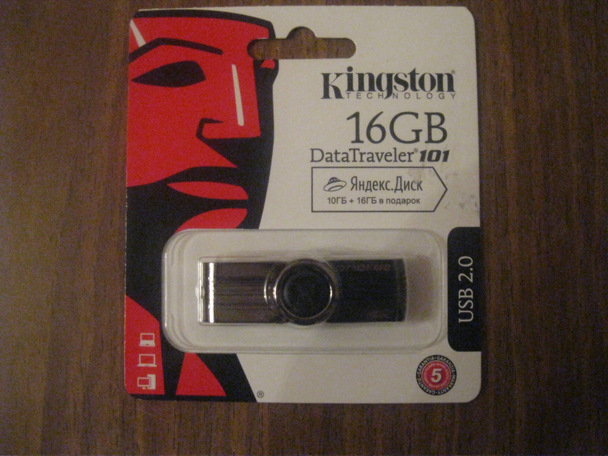
| Производитель: | Kingston |  |
| Тип устройства: | USB | |
| Модель: | DataTraveler 101 G2 | |
| Серии: | DT101G2/16GB | |
| Совместимость: | Windows XP, Vista, 7, 8, 10 | |
| Загрузки: | 85,095,619 | |
| Объем загрузки: | 3.4 MB | |
| Обновление базы данных: | ||
| Доступные для загрузки с использованием DriverDoc: | Загрузка | |



| Operating System | exFAT support | Patch download |
| Windows 7 | Supported natively | |
| Windows Vista | Requires update to Service Pack 1 or 2 (both supports exFAT) | Download Service Pack 1 (with exFAT support) Download Service Pack 2 (with exFAT support) |
| Windows XP (Service Pack 2 or 3) | Requires exFAT patch update | Must have Service Pack 2 or 3 installed to use this update Download exFAT patch update |
| Mac OS X | Requires Mac OS X version 10.6.6 and above |
Some of the flash storage device’s listed capacity is used for formatting and other functions and thus is not available for data storage, therefore you will not see the full capacity.
When a flash storage device is manufactured, steps are taken to ensure that the device operates reliably and permits the host device (computer, digital camera, PDA, etc.) to access the memory cells; i.e., to store and retrieve data on the flash storage device. These steps, loosely called "formatting," utilize some of the memory cells within the device and thus reduce the capacity available for data storage by the end-user.
Formatting includes the following operations:
- Testing each memory cell in the flash storage device.
- >
1. The DataTraveler could be conflicting with a pre-assigned drive letter. To resolve, do the following (Do not do this for a "Privacy" drive that assigns two drive letters):
- 1. Insert the DataTraveler and open "Control Panel". Then open "Administrative Tools".
- 2. Open Computer Management
- 3. Select “Disk Management” on the left window pane.
- 4. Locate the DataTraveler on the right window pane.
- 5. Right-click on the drive and select “Change Drive Letter and Paths.”
- 6. Click Change and select a new drive letter from the drop-down box. Then click OK.
2. The DataTraveler may be conflicting with pre-installed software. Disable all applications running in the background prior to installation of the Data Traveler.
3. Make sure Windows, any USB controller drivers and the system BIOS for you computer is up to date.
4. If you have a desktop computer, make sure the DataTraveler is inserted directly into one of the main USB ports on the back of the PC. Front ports, keyboard ports or USB Hubs may not supply sufficient power for the High Speed DataTraveler to function properly.
5. Check for a possible conflict is another USB device such as a printer or USB card reader. Unplug the other USB device, insert the DataTraveler drive and restart the system. After the DataTraveler is configured you should then be able to connect the other USB device.
You may have formatted the drive with an exFAT file system while using Windows 7. In order to resolve, reformat the drive with the FAT32 or NTFS file system. You may also be able to update your operating system to be compatible with exFAT. But be aware some devices (MP3 players, digital photo frames, etc) will not read exFAT file system.
Because the DataTraveler is 32GB or larger, Windows 7 will not allow you to format it FAT32. You will have to convert it using a Command Prompt. Click on Start>Run and type in CMD and click on the OK button. On the command prompt type the following (see image). Where F is your drive letter for your drive, replace it with what ever yours is. Please take notice of the spaces in between.

Windows assigns new drives to the next available physical drive. It will sometimes take the same drive letter as a network drive for this reason. This is a common problem with removable storage devices.
To resolve this go to control panel>administrative tools>computer management. Note the drives on the right window pane. See if the Kingston (x) is recognized. (x) denotes the drive letter that Windows assigned for the Data Traveler.
If the DataTraveler is using the same drive letter as one of the other drives, right click the Kingston Drive letter and click on "Change Drive letter and Paths".
On the next dialog box click on the "Change" button and assign a drive letter that is not currently being used.
Note: Do not manually change drive letters if you have a "Privacy" Data traveler that assigns two drive letters for the device.
Follow the steps below to format the DataTraveler with an NTFS File system using Windows PC.
Note: Admin rights are required.
- Remove all other external flash devices from your computer.
- Right-click My Computer (Computer in Vista) and select Manage.
Note: If User Account Control is enabled in Windows Vista, an alert will display. Click Continue to proceed. - From the right side window, double-click Storage and then double-click Disk Management.
- From the right side window, right-click the Kingston (Removable) drive and select Format.
Note: You may receive a warning: "This is the active partition on this disk. All data on the partition will be lost. Are you sure you want to format this partition?" Click Yes to proceed. - In the Format window, select "NTFS" file system and a check the box next to "Perform a quick format." Click OK.
- Click OK on the Format warning window.
The Kingston (Removable) drive window will display "Formatting" while the drive is being formatted. Once the format is complete, the status will revert to "Healthy."
ReadyBoost is a Windows Vista and Windows 7 feature which has the ability to utilize USB flash drive storage space to improve system performance. The DataTraveler does not support Windows ReadyBoost.
Windows may not recognize the MacOS Extended or Standard file system. To resolve, format the drive in MacOS DOS so that it can be used in both environments.
WARNING: Formatting will erase all of the data on the DataTraveler. Back up your data before proceeding.
- Insert the DataTraveler into the Mac OS X machine and wait for it to mount.
- Click on the "GO" option on the menu bar.
- Double-click on Utilities (If you do not see Utilities, double-click on Applications and then double-click on the Utilities folder.)
- Double-click on the Disk Utility icon.
- On the Disk Utility Dialog box, click once on the Kingston DataTraveler active partition.
Note: There will be two listings for the DataTraveler, the first one is the active partition and the second is the volume label. - Click the erase tab located on the right s >
Be aware MacOS 10.6.5 will support full read and write access to exFAT formatted drives. So formatting the drive using exFAT file system may also resolve this problem. MacOS still has read only access to NTFS formatted drives.
Some devices (MP3 players, digital photo frames, etc) will not read NTFS or exFAT file systems.
Also Windows XP and Vista will require an update in order to access exFAT.
Yes, this DataTraveler is supported by Linux as long as you have Linux Kernel 2.6.x and above.
Please note: If the DataTraveler comes with software, it will not function with Linux. Only the drive itself is compatible with Linux.
To resolve, make sure to insert the drive directly into the USB ports located on the computer. The USB ports found on the keyboard and some hubs may not supply sufficient power to properly operate the Kingston DataTraveler. Also, go to Finder>Preferences>Sidebar to ensure CD, DVD and iPod and External Disks are checked.
In Macs you first have to empty out the trash can in order to regain the space back. You may have to re-plug the drive back in after emptying out the trash.
Should this not work then a complete format of the device should be done. Please follow these instructions for formatting your Kingston device.
WARNING: Formatting will erase all your data so please make sure you have a copy before proceeding.
- Go to Go > Applications > Utilities and Open Disk Utility.
- Choose your drive from the left panel and then click Erase on the right.
- Select a Volume Format.Choosing MS-DOS File System will allow the drive to work on the Mac and Windows operating systems. If used only in a Mac then select Mac OS Extended as the Volume Format.
- Click Erase.
FAQ: KDT-010611-GEN-04
This happens if the DataTraveler has been formatted with Microsoft Windows NTFS. To resolve, format the DataTraveler with Mac OS X using MS-DOS File System.
To format the DataTraveler with Mac OS 10.3.X, do the following:
- Click on the "GO" option on the menu bar.
- Double-click on "Utilities" (If you do not see Utilities, double-click on Applications and then double-click on the Utilities folder.)
- Double-click on the "Disk Utility" icon.
- On the Disk Utility Dialog box, click once on the Kingston DataTraveler active partition.
Note: There will be two listings for the Data Traveler, the first one is the active partition and the second is the volume label. - Click the erase tab located on the right s >
Be aware MacOS 10.6.5 will support full read and write access to exFAT formatted drives. So formatting the drive using exFAT file system may also resolve this problem. MacOS still has read only access to NTFS formatted drives.
Some devices (MP3 players, digital photo frames, etc) will not read NTFS or exFAT file systems.
Also Windows XP and Vista will require an update in order to access exFAT.
For additional assistance using the Data Traveler, please visit http://www.kingston.com/support/howtodt/default.asp to view the DataTraveler "How To" videos.
Windows may not recognize the MacOS Extended or Standard file system. To resolve, format the drive in MacOS DOS so that it can be used in both environments.
WARNING: Formatting will erase all of the data on the DataTraveler. Back up your data before proceeding.
- Insert the DataTraveler into the Mac OS X machine and wait for it to mount.
- Click on the "GO" option on the menu bar.
- Double-click on Utilities (If you do not see Utilities, double-click on Applications and then double-click on the Utilities folder.)
- Double-click on the Disk Utility icon.
- On the Disk Utility Dialog box, click once on the Kingston DataTraveler active partition. Note: There will be two listings for the DataTraveler, the first one is the active partition and the second is the volume label.
- Click the erase tab located on the right s >
Be aware MacOS 10.6.5 will support full read and write access to exFAT formatted drives. So formatting the drive using exFAT file system may also resolve this problem. MacOS still has read only access to NTFS formatted drives.
Some devices (MP3 players, digital photo frames, etc) will not read NTFS or exFAT file systems.
Also Windows XP and Vista will require an update in order to access exFAT.
For additional assistance using the DataTraveler, CLICK HERE to view the DataTraveler "How To" videos.
Contact Technical Support
Questions about a Kingston product you already own? Ask a Kingston expert.


