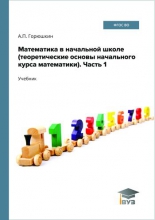
Издательство: Вузовское образование
Автор: Горюшкин А.П.
Год издания: 2020
ISBN: 978-5-4487-0591-5 (ч. 1), 978-5-4487-0590-8
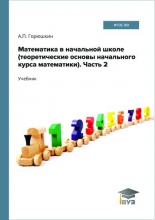
Издательство: Вузовское образование
Автор: Горюшкин А.П.
Год издания: 2020
ISBN: 978-5-4487-0592-2 (ч. 2), 978-5-4487-0590-8
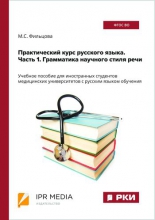
Издательство: Ай Пи Ар Медиа
Автор: Фильцова М.С.
Год издания: 2020
ISBN: 978-5-4497-0282-1 (ч. 1), 978-5-4497-0285-2
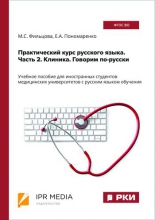
Издательство: Ай Пи Ар Медиа
Автор: Фильцова М.С., Пономаренко Е.А.
Год издания: 2020
ISBN: 978-5-4497-0283-8 (ч. 2), 978-5-4497-0285-2
Издательство: Ай Пи Ар Медиа
Автор: Журомская Л.И., Фильцова М.С.
Год издания: 2020
ISBN: 978-5-4497-0284-5 (ч. 3), 978-5-4497-0285-2

Автор: Шидловская С.Н.
Год издания: 2019
С этой книгой также читают
Автор: Баталов Э.Я.
Год издания: 2009

Автор: Челдышова Н.Б.
Год издания: 2009
Просмотр оглавления издания
Просмотр списка использованных источников
Бесплатная горячая линия
8 800 555 22 35
Доступ к фондам ЭБС IPRbooks предоставляется круглосуточно.
410012, г. Саратов, ул. Вавилова, 38/114, офисы 425, 428, 1019
Тел./факс: 8 800 555 22 35
Мы в социальных сетях:


Отдел комплектования ЭБС IPRbooks:
8 800 555 22 35
8 800 555 22 35
Отдел продаж и внедрения ЭБС IPRbooks:
8 800 555 22 35
доб. 206, 213, 144, 145
Сетевое издание «www.iprbookshop.ru» зарегистрировано в Федеральной службе по надзору в сфере связи, информационных технологий и массовых коммуникаций (Роскомнадзор) 7 декабря 2018 года. 16+
Установите баннер на ваш сайт:
Инструкция по установке кнопок электронно-библиотечной системы «IPRbooks»
Для установки одного из баннеров ЭБС «IPRbooks» на свой сайт, скопируйте код из соответствующего поля и поместите его в необходимом месте на вашем сайте.
Saint Petersburg State University of Architecture and Civil Engineering
MASTERING ENGLISH

МИНИСТЕРСТВО ОБРАЗОВАНИЯ И НАУКИ
РОССИЙСКОй ФЕДЕРАЦИИ
Санкт-Петербургский Государственный
Архитектурно-Строительный университет
М.В. Процуто, Л.П. Маркушевская, Н.Г. Дворина,
Ю.А. Цапаева, С.А. Ермолаева, Т.Е. Сахарова
MASTERING ENGLISH
Учебное пособие для магистрантов
под редакцией кандидата педагогических наук,
Марины Владимировны ПРОЦУТО
 |
Рецензенты: кандидат педагогических наук, доцент кафедры лингводидактики и перевода Гумантираного института Санкт-Петербургского политехнического университета Петра Великого Н.А. Кабанова;
кандидат филологических наук, доцент кафедры иностранных языков Санкт-Петербургского государственного архитектурно-строительного университета Н.В. Антоненко.
М.В. Процуто, Л.П. Маркушевская, Н.Г. Дворина,
Ю.А. Цапаева, С.А. Ермолаева, Т.Е. Сахарова
Mastering English (учебное пособие для магистрантов под редакцией М.В. Процуто) СПб. гос. архит.-строит. ун-т. – СПб.,2016. – 301 с.
Данное учебное пособие является первой частью учебно-методического комплекса “Mastering English” направленного на развитие коммуникативных умений различных видов речевой деятельности, а также аннотирования и реферирования научной литературы, составления презентаций и устных докладов на английском языке. Сборник содержит справочный материал, обучающий написанию и оформлению научных статей.
Учебное пособие состоит из двух глав, первая из которых включает ряд тематически связанных оригинальных текстов по специальности, а также комплекс упражнений, являющихся образцами коммуникативных ситуаций диалогической и монологической речи в соответствии с принципами современной коммуникативной методики. Во второй главе даны подробные теоретические рекомендации по составлению презентаций и практические задания для тренировки соответствующих навыков. Учебный материал по составлению абстрактов, аннотаций и научных докладов с практическими заданиями облегчит магистрантам написание научных статей и подготовку выступлений на международных конференциях. В приложениях представлены наиболее употребительные сокращения, термины и словосочетания, характерные для англо- американской научно-технической литературы.
Данное учебное пособие предназначено для работы в группах магистрантов технических специальностей.
© М.В. Процуто, Л.П. Маркушевская, Н.Г. Дворина,
Ю.А. Цапаева, С.А. Ермолаева, Т.Е. Сахарова, 2016
архитектурно-строительный университет, 2016
Contents
| Part I. | Texts for reading and discussion |
| Module 1 … … … … … … … … … … … … … | |
| Module 2 … … … … … … … … … … … … … | |
| Module 3 … … … … … … … … … … … … … | |
| Module 4 … … … … … … … … … … … … … | |
| Module 5 … … … … … … … … … … … … … | |
| Part 2 | Making Presentations … … … … … … … … … |
| Checklists for Preparation and Presentation … … | |
| Phrase Bank … … … … … … … … … … … … | |
| Working with secondary sources of information. Writing summaries … … … … … … … … … … | |
| Vocabulary exercises … … … … … … … … … … | |
| Appendix | Symbols and formulas … … … … … … … … … |
| Shapes, Lines, Sizes … … … … … … … … … … | |
| Greek alphabet, English and Russian transliteration | |
| Literature … … … … … … … … … … … … … |
MODULE 1
UNIT 1
History of Architecture
LEAD-IN
Exercise 1. Give your point of view on the following:
1. What type of innovations came from the Ancient Roman Civilization?
2. What Ancient Roman influences can we see in modern architecture?
Exercise 2. Read and translate the following words and word combinations:
Ambience, engulf, post-and-lintel, semicircular barrel vault, groin vault, segmental vault, stucco, clerestory, architrave, tuff, travertine, nave.
COMPREHENSIVE READING
Architecture is the art and the science of building which deals with planning and designing form, space and ambience to reflect functional, technical, social, environmental and aesthetic considerations. The word “architect” comes from a Greek word meaning “master/ chief builder” and an architect designs buildings and supervises their construction. Architecture is both the process and product of planning, designing and construction. Architectural works, in the material form of buildings, are often perceived as cultural symbols and as works of art. The history of architecture traces the changes in architecture through various traditions, regions, stylistic trends, and dates. Historical civilizations are often identified with their surviving architectural achievements.
The term “architecture” has been adopted to describe the activity of designing any kind of system, and is widely used in information technology.
Roman architecture is the perfect example of innovation and experimentation in construction; it gave mankind buildings that had never been seen before, a network of connecting roads which was marvelously executed, and public structures that could be used by people from all strata of society just as equally, which added to their appeal. The Romans widely employed, and further developed the arch, vault and dome, which were little used before, particularly in Europe. Their innovative use of Roman concrete facilitated the building of the many public buildings of often unprecedented size throughout the empire. These include Roman temples, Roman baths, Roman bridges, Roman aqueducts, Roman harbours, triumphal arches, Roman amphitheatres, Roman circuses, palaces, mausolea and in the late empire also churches.
Roman Architecture covers the period from the establishment of the Roman Republic in 509 BC to about the 4th century AD, after which it becomes reclassified as Late Antique or Byzantine architecture. Almost no substantial examples survive from before about 100 BC, and most of the major survivals are from the later empire, after about 100 AD. Roman architectural style continued to influence building in the former empire for many centuries, and the style used in Western Europe beginning about 1000 is called Romanesque architecture to reflect this dependence on basic Roman forms.
Innovation started in the first century BC, with the invention of concrete, a stronger and readily available substitute for stone. Tile-covered concrete quickly supplanted marble as the primary building material and more daring buildings soon followed, with great pillars supporting broad arches and domes rather than dense lines of columns suspending flat architraves. The freedom of concrete also inspired the colonnade screen, a row of purely decorative columns in front of a load-bearing wall. In smaller-scale architecture, concrete’s strength freed the floor plan from rectangular cells to a more free-flowing environment.
The use of vaults and arches, together with a sound knowledge of building materials, enabled them to achieve unprecedented successes in the construction of imposing infrastructure for public use. Examples include the aqueducts of Rome, the Baths of Diocletian and the Baths of Caracalla, the basilicas and Colosseum. These were reproduced at a smaller scale in most important towns and cities in the Empire.
As the Roman Empire expanded to engulf not only the Mediterranean region but also large areas of Western Europe, Roman architects struggled to achieve two overriding aims: to demonstrate the grandeur and power of Rome, while also improving the life of their fellow citizens. Architecture is Ancient Rome’s unique contribution to the history of art and to the culture of Europe.
Building Techniques
In architecture, however, the Romans absorbed some important techniques from the Etruscans before Greek influence was decisively felt. This included the arch and the vault, which were destined to carry Roman engineering into a development directly away from that of ancient Greece, who preferred “post-and-lintel” building methods to arches and domes. Thus was laid the foundation of the art in which the Italic peoples were to surpass the Hellenes: structural engineering. The vaulting techniques used by the Romans were the simple geometric forms: the semicircular barrel vault, the groin vault, and the segmental vault. The vault surfaces were typically covered with stucco or tiles. An excellent example of Roman vaulting is the Basilica of Constantine and Maxentius in Rome. A natural development of the vault was the dome, which enabled the construction of vaulted ceilings and the roofing of large public spaces such as the public baths and basilicas. The Romans relied heavily on the dome for much of their architecture, such as Hadrian’s Pantheon, the Baths of Diocletian and the Baths of Caracalla.
The mastery by Roman architects and engineers of the arch, vault and dome – further enhanced by their development of concrete – helped them to solve the first problem of monumental architecture, which is to bridge space. Roofing a great area means carrying heavy materials across spaces impossible to span with the Greeks’ simple post-and-lintel system. In the arch, and the vault that grew out of it, the Romans had a means of thrusting the massive Colosseum walls storey above storey, of covering a luxurious bathing hall that could accommodate three thousand persons, and of creating the majestic form of the Pantheon.
Building Materials
The earliest buildings in Rome were made of tuff, a type of volcanic rock of varying hardness, which could be worked mostly with bronze tools. Later, harder stones were used, like peperino and local albani stone from the Alban hills. During the empire, the most common stone used for building was travertine, a form of limestone quarried in Tivoli, as used on the exterior of the Colosseum in Rome. Marble was used only for facing or decoration, or sometimes in mosaics. Coloured marbles and stones like alabaster, porphyry and granite, were also popular, as exemplified by the remains of Hadrian’s Villa at Tivoli. The majority of houses were made with a variety of unburned bricks faced with stucco.
The Roman mastery of concrete was a major step forward. Its strength, flexibility, convenience and low cost – when compared to any other building material – made arch, vaults and domes much easier to build. First employed in the town of Cosa sometime after 273 BC, its widespread use was a key event in the Roman architectural revolution, and freed Roman construction from the restrictions of stone and brick material and allowed for revolutionary new designs in terms of both structural complexity and dimension. Laid in the shape of arches, vaults and domes, it quickly hardened into a rigid mass, free from many of the internal thrusts and strains that troubled the builders of similar structures in stone or brick. The widespread use of concrete in many Roman structures has ensured that many survive to the present day. The Pantheon, Baths of Caracalla, and Basilica of Constantine in Rome are just three examples.
Roman concrete was typically made from a mixture of lime mortar, water, sand and pozzolana, a fine, ochre-coloured volcanic earth, which set well even under water. To this cement mixture, was added a combination of tuff, travertine, brick, and other rubble. These ingredients made concrete less prone to cracking.
Basilicas
The most influential type of religious building developed by Roman architects was the basilica. Originally secular in purpose, it was destined to become an early prototype for the first Christian churches. The basilica was commonly situated in the Forum of a Roman city, and was designed as a large covered hall to be used as a place of general assembly for trade, banking, and administration of the law. The standard Basilica plan had a central nave between side aisles; and it was here that clerestory lighting and construction were introduced into European building. A few basilicas were given semicircular halls at the end opposite the entrance, corresponding to the later church apse or altar area. The oldest basilica is the Basilica Porcia (184 BC), while the famous Church of St. Paul Outside the Walls (4th century AD) in Rome, though rebuilt in the 19th century (according to the 4th-century plan), illustrates the impressive simplicity and grandeur of the basilica design, combined with late Roman sumptuous decoration. It is one of Rome’s four most distinguished papal basilicas: the others being the basilicas of St. Mary Major, St. Peter’s, and St. John Lateran. The most magnificent example is the Basilica of Constantine and Maxentius, an awesome example of the cohesion and strength of Roman concrete.
The Pantheon

 The greatest surviving circular temple of classical antiquity, and arguably the most important example of ancient art produced in Rome, is the Pantheon.Today it has lost its interior embellishments, though it is the best preserved of major Roman monuments; but it takes the breath by the vast dimensions, the simplicity of its forms, and the audacity of the structural design. A temple-like forecourt or porch lies against an immense 142-foot wide circular hall or rotunda, under a low dome. The engineering is elementary: the rotunda’s walls form the drum from which the dome springs direct; there are no windows. Light is admitted to the building solely through a great 28-foot oculus left open to the sky at the top. To sustain the thrust of the dome, the walls are twenty feet thick, and there are eight apse-like niches hollowed in them – one opened to form the main portal, the others designed for statues of gods and later transformed by the Christians into side-chapels. In its time the inside of the dome, richly coffered, and the marble trim of walls and apses, must have been impressively sumptuous; but today it is the grand simplicity of the engineering and the great spaciousness that thrill the visitor. The Pantheon is truly one of the world’s most impressive buildings. The Corinthian temple facade of the French Pantheon (1790) Paris, designed by Jacques Germain Soufflot (1713-80), is a direct copy of its ancestor in Rome.
Roman architecture has had a colossal influence on building construction in the West. If Greek architects established the main design templates, Roman architects established the basic engineering prototypes. Thanks to their mastery of the arch, vault and dome, they set the standard for most types of monumental architecture. Their example was followed closely in Byzantine art (Hagia Sophia), in medieval Russian architecture (the onion domes of St Basil’s Cathedral, Moscow), in Renaissance architecture (Florence Cathedral) by the likes of Fillippo Brunelleschi (1377-1446), Andrea Palladio (1508-80) and others, and Baroque architecture (St Paul’s Cathedral), and inspired Neoclassical architecture around the world. The Pantheon in Paris (1790), and the US Capitol Building (1792-1827) in Washington DC are just two of the world-famous structures derived from Roman architecture. In addition, Roman bridges, aqueducts and roads became the models for later architects and engineers throughout the world.
COMPREHENSIVE CHECK
Дата добавления: 2016-11-24 ; просмотров: 447 | Нарушение авторских прав
специальность: иностранные языки
квалификация: учитель английского языка (Ленинградский государственный университет им. А. А. Жданова, С. Петербургский государственный университет педагогического мастерства.)
- Основные подходы при разработке и реализации рабочих программ и технологий обучения при преподавании гуманитарных дисциплин С. Петербург 28.08.2013-27.12.2013 С. Петербургский государственный политехнический университет.
- Дистанционные курсы и электронные учебники по английскому языку, компания McMillan, 2012.
- Способ автоматизации процесса перевода, внедрение инновационных технологий в процесс обучения студентов С. Петербург, All Correct Language Solution, 2013г.
- Новые информационные и сетевые педагогические технологии в лингводидактике. . С. Петербург 24.10.2016-29.10.2016 С. Петербургский политехнический университет Петра Великого
- Современные педагогические технологии обучения иностранному языку в высшей школе. С. Петербург 10.052018 – 13.05.2018г. СПбГАСУ.
- Охрана труда педагогических работников образовательных учреждений. ФГБОУ ВО СПбГАСУ, 2017г.
| Читаемые дисциплины: | |
|---|---|
| |
| Профессиональные интересы: | |
| |
| Научные интересы: | |
| |
| Участие в научных конференциях: | |
| Участник 15 научных конференций | |
| Количество публикаций: | |
| автор и соавтор более 30 опубликованных научных и учебно-методических работ, в т. ч. 22 научных статей, 1 учебника (в соавт.) и 7 учебно-методических пособий (в соавт.) | |
| Наиболее значимые публикации | |
| Статьи: | |